SymfonyCon Amsterdam 2025
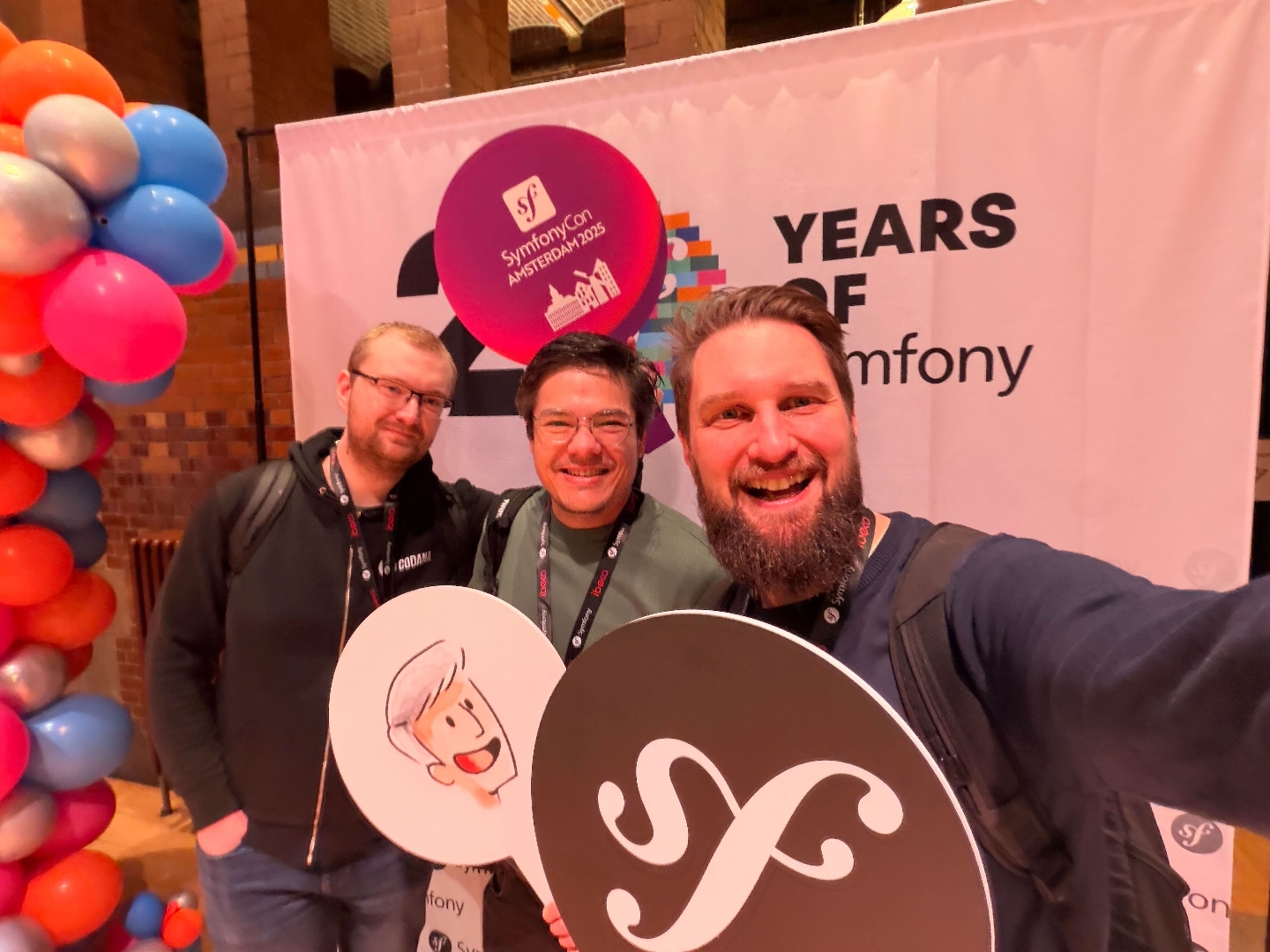
At Codana, we continue to lead the way in the world of custom software. That is why we were present once again last year at SymfonyCon 2025, held in Amsterdam's iconic convention center. With more than 30 talks spread across three tracks, one central theme emerged: how will we build even faster and more intelligent custom web apps in 2026?
The launch of Symfony 8
The year 2025 marked the 20th anniversary of Symfony. Creator Fabien Potencier celebrated this milestone with the live release of Symfony 8. For our clients, this new version represents a massive leap in stability and performance:
-
Leaner core: All deprecated code from the 7.x cycle has been removed, resulting in faster execution of business-critical processes.
-
PHP 8.3+ support: Full utilization of the latest PHP features for more robust code.
-
Mature scheduler: The integration of complex cron scheduling and asynchronous tasks (via Messenger) makes managing background processes in large enterprise applications simpler and more reliable than ever.
The breakthrough of Symfony AI
The most discussed innovation was undoubtedly the new Symfony AI component. While AI is often limited to simple chatbots, Symfony focuses on 'AI Agents'.
These are autonomous systems that interact with existing PHP services and databases within your custom web development project. The benefits for scalable applications are significant:
-
Vendor-agnostic: We can effortlessly switch between models such as OpenAI, Claude, or Mistral without rewriting the entire architecture.
-
Structured output: AI delivers data directly in formats like JSON, which is essential for seamless integrations within business software.
-
Context awareness: Thanks to the Model Context Protocol (MCP), the AI gains secure access to local business data.
Performance at scale
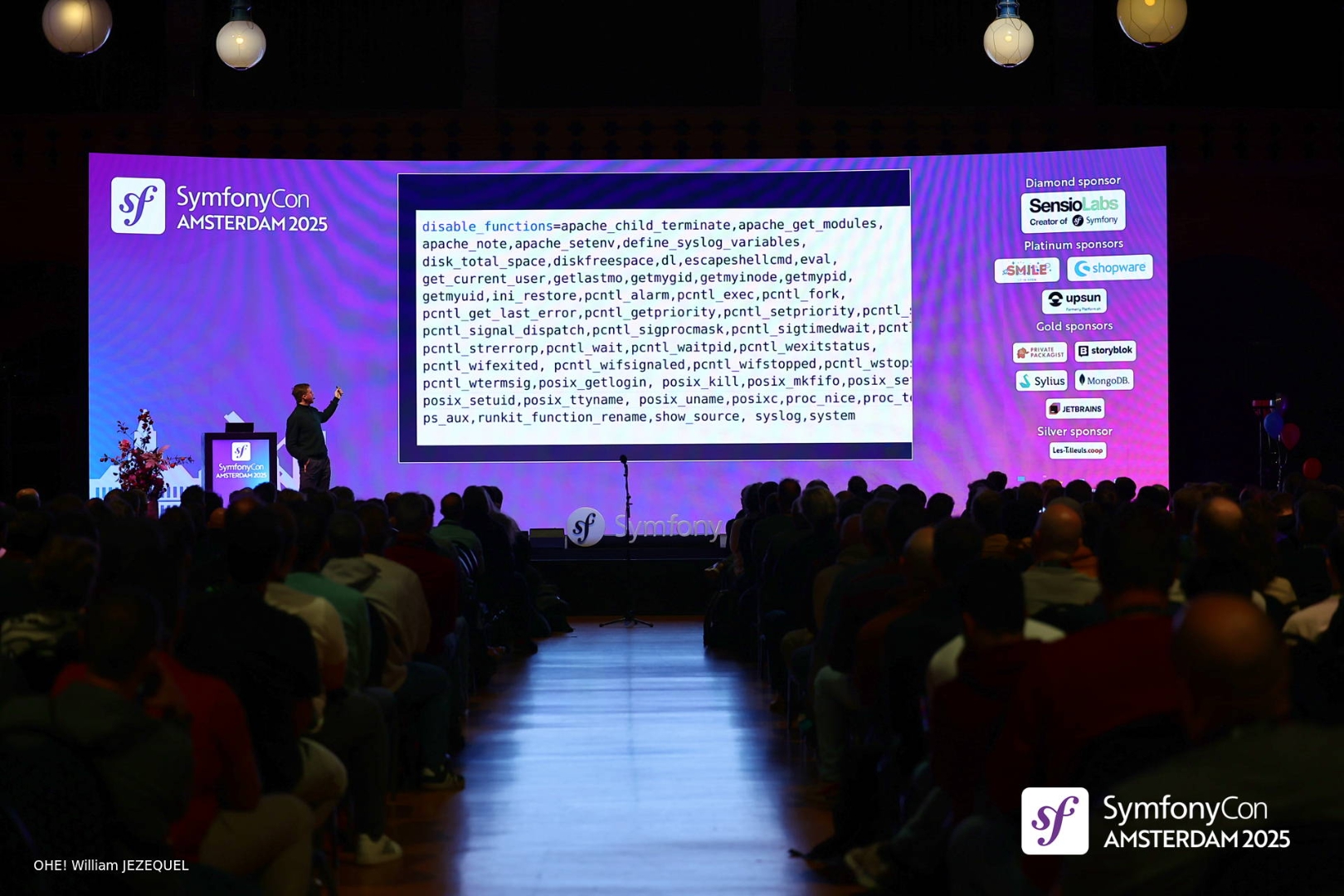
Performance is the backbone of any successful web app. Expert Paul Dragoonis demonstrated that standard PHP configurations are often too conservative for high-traffic environments.
By utilizing tools such as FrankenPHP, Grafana, and Prometheus, we at Codana can monitor and optimize the performance of our applications down to the smallest detail. This ensures that our custom software is not only functional but remains lightning-fast under heavy loads.
More efficient development with Native Lazy Objects
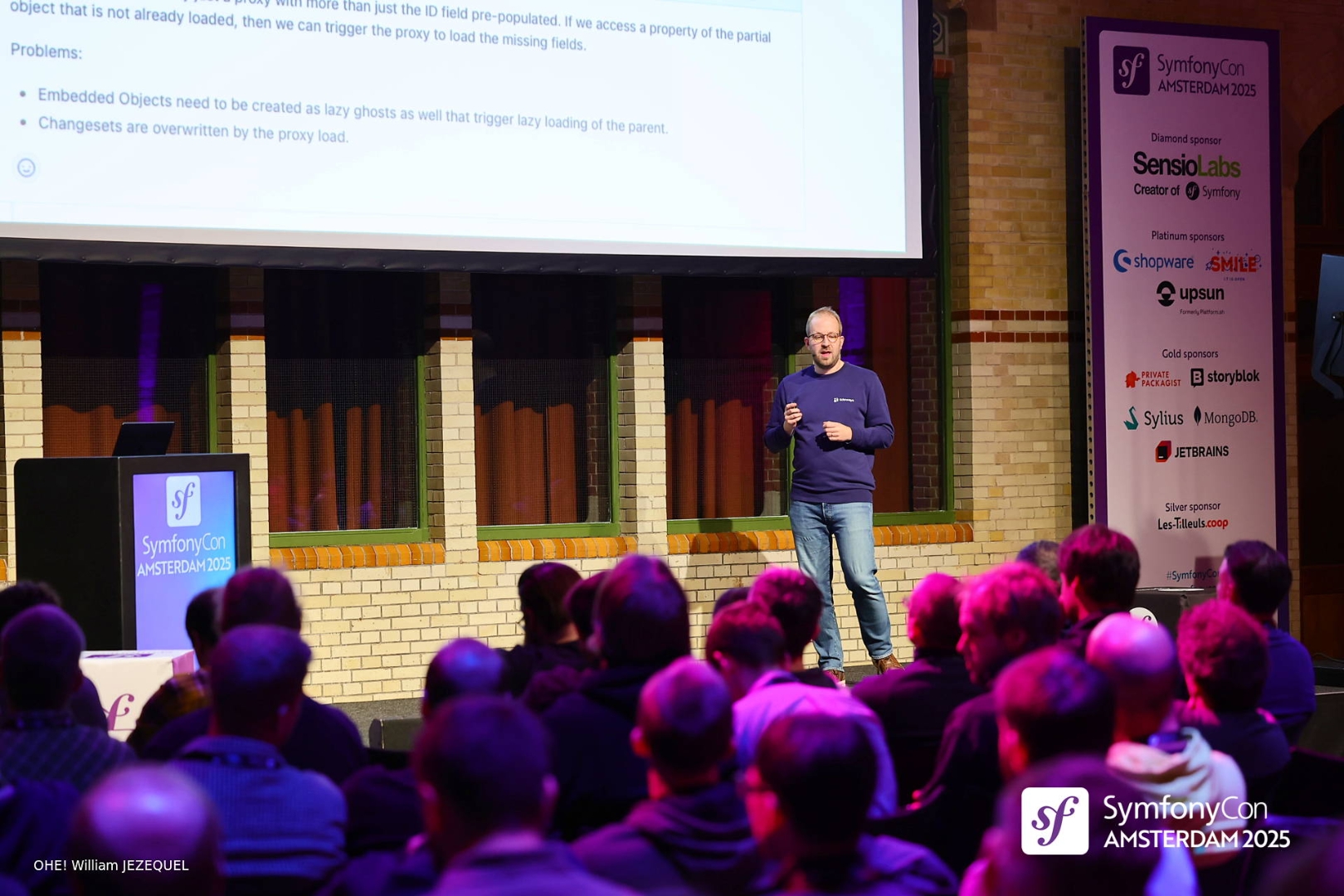
Benjamin Eberlei (Doctrine ORM) discussed a fundamental shift in PHP 8.4: Native Lazy Objects. Previously, frameworks had to use complex workarounds to load data only when absolutely necessary (lazy loading).
Now that this is native to the PHP engine, applications that rely heavily on large databases (such as complex ERP systems or dashboards) become significantly more efficient and less memory-intensive. This is a game-changer for the architecture of scalable applications.
Quality through advanced testing
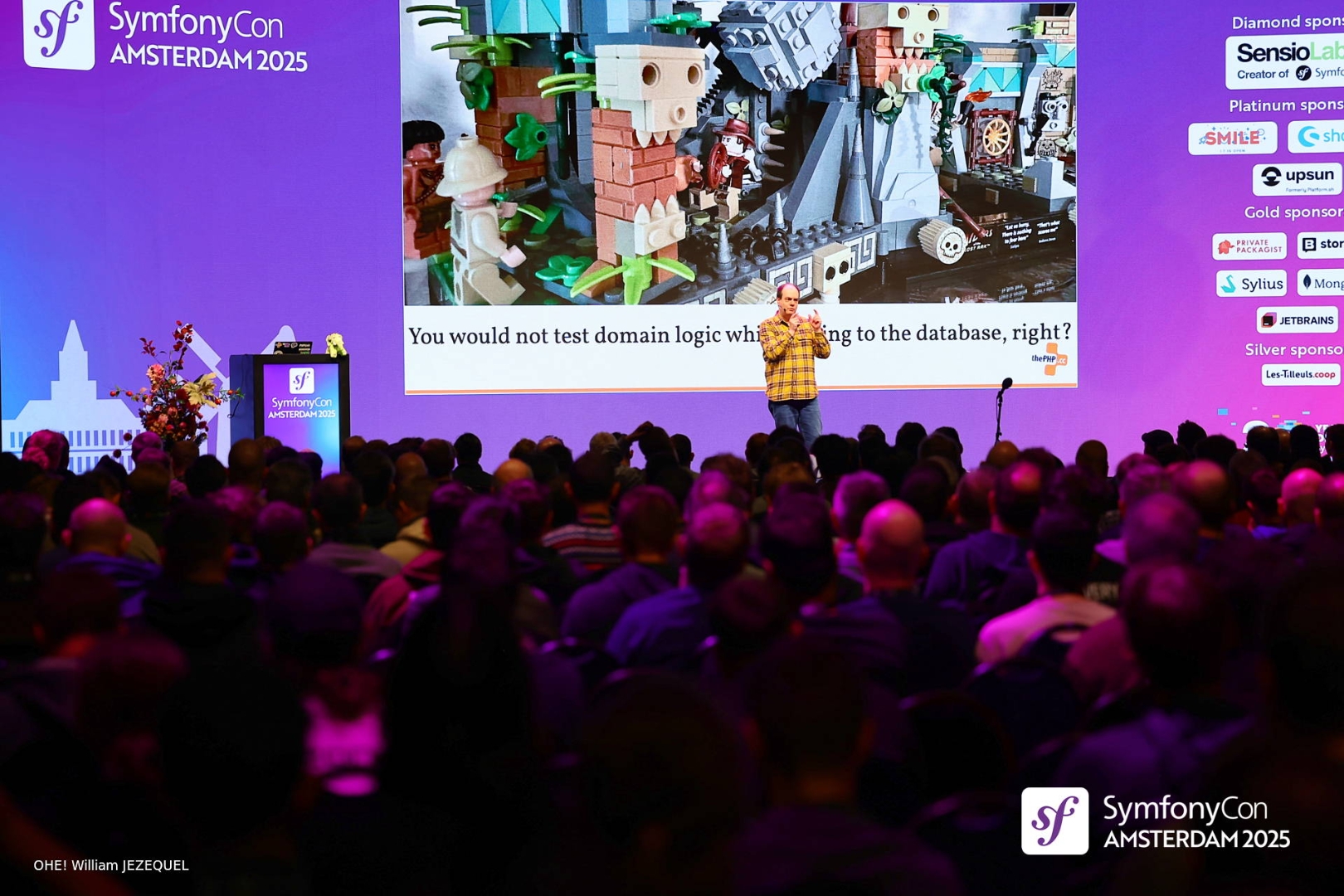
Finally, Sebastian Bergmann (PHPUnit) emphasized the importance of smart testing strategies. By using test doubles and mocks, we can simulate complex scenarios within a business application without involving the entire infrastructure. This leads to a faster development cycle and higher reliability of the delivered code.